.png)


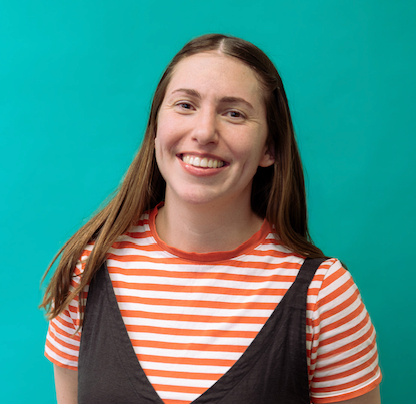
Zainab Shaikh, Founder of Luxiora Cosmetics, on Vegan Makeup, Ingredient Transparency and Beauty for Indian Skin Tones

Beauty is often discussed in terms of what a product promises, but the more interesting questions concern the decisions behind its formulation, the thought that goes into developing a shade, and the standards a brand is willing to maintain when a product does not meet its expectations. For Zainab Shaikh, founder of Luxiora Cosmetics, these questions have their roots in thirteen years spent working on clinical trials involving drug safety and acne efficacy, long before she entered the beauty industry. Her experience in clinical research gave her a different perspective on cosmetics, particularly the claims made about products, the ingredients listed on their packaging and the consequences of using formulations that may not be what they appear to be. At Luxiora, this thinking extends from publishing ingredient lists and developing shades for Indian skin tones to decisions such as abandoning a foundation that failed to work well on olive undertones, despite the work already invested in it. We have tried Luxiora’s lipsticks and blushes at Style Essentials and have been genuinely pleased with the products, making this conversation an opportunity to look beyond our experience with the makeup and understand the thinking that informs the brand. In this interview, Zainab discusses her transition from clinical research to beauty entrepreneurship, the realities of developing cosmetics for Indian consumers, and the responsibility she believes comes with creating products women use on their skin every day.
You spent thirteen years on clinical trial teams working on drug safety and acne efficacy studies before starting Luxiora. In that work, a formulation doesn't move forward until it clears a defined bar of evidence. Name one specific bar from that world you tried to import into cosmetics, and one you had to abandon because the category simply doesn't allow for it.
In clinical research, a product can only move forward if the data proves it. If a study does not demonstrate the result, you cannot take the product forward. I followed this principle for thirteen years, and it was the first thing I brought into Luxiora. Before any claim goes on our packaging, website or advertising, I ask one question: do we have proof for this?
What I had to give up was the possibility of conducting a full clinical trial for every cosmetic product in the same way a drug would be tested. Drug trials involve randomly selected participants, blinding, a carefully calculated sample size and approval from an ethics committee. Cosmetics are not subject to the same requirements, and a small Indian brand cannot afford to conduct a full clinical trial for every product and shade. I wish we could. For now, I would rather tell women exactly what we have tested than make a claim we cannot support.
Most founders describe a "gap in the market". You've described actual harm: women sold counterfeit or cheap-grade cosmetics as the real thing, with real skin damage as a result. Was there a specific case, a specific woman's skin, a specific product, that you can describe in enough detail that it stops being a talking point and becomes a fact?
During acne drug trials, we tracked each patient's skin at every visit. Sometimes, a patient's acne worsened even though she was receiving treatment. When we looked more closely, the reason was often the makeup she wore every day rather than the drug itself. The makeup remained on her skin for hours, clogging pores and working against the progress we were trying to achieve through treatment. We were measuring the medicine's effectiveness, but the makeup was also influencing the results.
Outside clinical trials, I saw another side of the problem. Women were buying copies of international products, paying around ₹1,500 for imitations of products that cost ₹5,000. These were cheap formulations presented in luxury packaging. The women buying them were not careless; they simply wanted to look and feel good and believed they were getting international-quality products at a lower price. Nobody had told them what was actually inside.
Bringing these two experiences together changed how I looked at beauty. What a woman applies to her face every day matters, particularly when she uses it for hours at a time. That is one of the reasons I started Luxiora: to offer good-quality products at a fair price, with nothing hidden.
Carmine is the standard route to a true red, and it isn't vegan. Luxiora claims no animal-derived ingredients in any shade, including the reds. What replaced it? What did you lose in pigment stability or wear time by making that swap? And how long did it take to close that gap?
Carmine is an easy way to achieve a true red, but it is made from crushed insects, so it had no place in a brand committed to using no animal-derived ingredients. We never used it. Our reds are made with synthetic lake pigments approved for cosmetic use, blended with iron oxides to achieve greater depth. Nothing in any Luxiora shade comes from an animal. Luxiora is also listed by PETA in its own name as Animal Test-Free and Vegan.
In terms of stability and wear time, we did not lose much because lake pigments are very stable. They do not fade quickly and can hold their color well throughout the day. The greater challenge was getting the shade right. Carmine produces a deep, cool red with a slightly blue undertone, whereas synthetic reds can look a little orange or flat when used on their own. Each red therefore needs to be developed by carefully blending pigments.
A red that looks right in the pan can look quite different on Indian skin, especially on warm and dusky tones. Closing that gap took several rounds of shade trials with our manufacturer, adjusting the pigment combinations and checking the results on different skin tones until the red looked rich rather than orange. Red was the hardest shade to get right, and it is where our commitment to vegan formulations was tested most. I did not want that promise to hold true for every shade except the difficult one.

"Swatch-tested for Indian skin" is a claim almost every Indian beauty brand makes now. What does your actual testing panel look like? How many skin tones, what undertones, how many people, and what's one shade that failed on a tone most brands wouldn't have bothered testing against?
I am still developing our testing process, but we generally test shades on more than 50 women before a product launch. They represent a range of Indian skin tones, from fair and wheatish to dusky and deep. We also test across warm, cool, neutral and olive undertones. Undertone matters more than people often realize because two women with the same depth of skin can wear the same shade very differently.
Our pink shades taught us a great deal. On fair and wheatish skin, they looked fresh and pretty. On dusky and deep skin with olive undertones, however, the same pinks turned chalky and ashy, sitting on top of the skin instead of blending naturally. Terracotta presented a similar problem: on olive skin, it looked muddy rather than warm.
Olive undertones are common among Indian women, yet they can be overlooked when brands develop shades. We adjusted the pigments until the colors looked more natural on deeper skin tones as well. If a shade works only on fair skin, I do not consider it finished.
Luxiora is positioned as vegan and cruelty-free, and you publish full ingredient lists. Has an ingredient supplier ever misrepresented something to you as compliant when it wasn't, and how do you verify that the ingredients meet your commitments?
No, this has not happened with any of our products. But that is not because I trust every supplier without question. It is because I check. Luxiora is listed by PETA in its own name as Animal Test-Free and Vegan, but a certificate is only one part of the process. What matters is what is actually inside the product.
I personally review the complete ingredient list of every formula before we approve it. I look for ingredients that can be animal-derived, such as beeswax, carmine and lanolin. Where a product requires wax, we use plant-based alternatives such as candelilla and carnauba waxes. If anything is unclear, I ask the manufacturer about its origin and request written confirmation.
My years in clinical research taught me that mistakes do not always result from deliberate dishonesty. They can arise from outdated documents, copy-and-paste errors or details that nobody has checked. That is why I do not check just once. Whenever a formula or supplier changes, I verify the information again.
Clinical research requires extensive safety and efficacy testing before a drug reaches a patient, whereas cosmetics operate under a different regulatory framework. Where does the comparison hold, and where does it fall apart, given the difference in regulation?
I believe anything a woman applies to her eyes or lips deserves careful consideration. In clinical research, a drug is evaluated through a structured process before it reaches patients, with studies designed to assess its safety and effectiveness. Cosmetics do not follow exactly the same pathway, and the regulatory requirements are different.
In India, cosmetics must comply with applicable requirements covering matters such as licensing, labeling and prohibited ingredients, but they do not generally undergo the same pre-market clinical evaluation as medicines. That means brands have a responsibility to be careful about their formulations and the claims they make, rather than assuming that compliance alone answers every question about a product.
For me, this is where the comparison with clinical research becomes useful. A lipstick is not a medicine, and it should not be judged as though it were one, but that does not make ingredient transparency or product safety any less important. A product that does not treat an illness should still be developed with care and should not cause avoidable harm.
At Luxiora, we publish the complete ingredient lists for our products, test products that require particular attention, including our kajal because it is used close to the eyes, and try to ensure that our claims reflect the evidence available. We may not be able to reproduce every aspect of a pharmaceutical trial programme, but we can make careful decisions about what we formulate, what we test and what we promise.

Full ingredient lists are published on every product page, which is not a universal practice in this category. Was there ever an ingredient you chose to remove because you weren't willing to defend it publicly on the label, even though it was legal to include?
Yes, two ingredients: parabens and talc.
When we started developing our products, both were easy choices. Parabens help prevent bacterial growth, while talc gives products a soft, smooth texture. Both are inexpensive and legally used in cosmetics in India.
But I had already decided that we would publish the full ingredient list on every product page. That made me ask myself whether I would be comfortable standing behind every ingredient if a woman questioned its presence on our label. Many women are concerned about parabens, even though they are permitted by law. Talc also needs to be properly tested for purity because contamination with asbestos, which is harmful, is a potential concern.
I could explain the technical considerations behind both ingredients, but I did not want to ask women simply to trust me. I did not want our ingredient list to require an explanation that customers had to accept without question. So we removed both. It cost us more and required additional work, but I am happy with that decision.
You built Luxiora across kajal, blush, lip and cheek tints rather than a single hero product. Was there a product concept that reached the working-formula stage but never made it to the shelf?
Yes, a foundation. We had developed a working formula with a good texture that blended well and looked natural on many skin tones. But it did not match women with olive undertones well enough.
Olive skin has a subtle green-gold tone, and on some of the women we tested, the foundation began turning grey after two to three hours. Instead of making the face look fresh, it made the complexion appear dull and tired. We adjusted the shades several times, but we could not resolve the problem without starting the formulation again.
Foundation is the one product that needs to match the skin particularly closely. If it does not, the difference is immediately noticeable. Many brands launch shades claiming to work for olive undertones, but the results do not always meet those expectations. I did not want to launch a foundation that failed so many Indian women, especially after all the work we had already invested in it. So we stopped the project.
That experience also influenced our decision to build a range rather than depend on one hero product. Kajal, blush and lip and cheek tints offer different ways to use color and can be more forgiving across skin tones, although each still needs to be developed and tested carefully.
Has the counterfeit and cheap-grade cosmetics problem that prompted you to start Luxiora improved, worsened or simply moved elsewhere? Where do you see the greatest concern today?
It has not improved. It has spread. When I started, fake and cheap-grade cosmetics were mostly found in local markets. Today, the problem exists in both offline shops and online stores.
Enforcement actions reported in Maharashtra in June 2026 illustrate the concern. The Maharashtra Food and Drug Administration seized illegal and misbranded cosmetics worth ₹34.61 lakh during raids in Mumbai, including Crawford Market, and Satara. During the same month, authorities in Pune reportedly found counterfeit bottles of a well-known international cleanser being sold through a regular retail shop and filed an FIR.
What worries me most is that counterfeit products no longer necessarily look fake. They can sit on a shop shelf or appear on an online product page in packaging that looks almost identical to the original. The woman buying the product may have no way to tell what is inside and may only discover the problem when her skin reacts.
The problem has therefore become harder to identify. That is one reason we publish the complete ingredient list for every Luxiora product. Women should be able to check what they are buying rather than relying only on the packaging.
If a dermatologist or toxicologist from your clinical research background examined Luxiora's full ingredient lists today, what do you think they would question most?
I think they would question our claims rather than our ingredients. In clinical research, every claim needs strong evidence. If a medicine says it works within 12 hours, a properly designed study must demonstrate that result, with a defined number of participants, a clear methodology and experts evaluating the findings.
In cosmetics, claims such as "long-lasting," "smudge-proof" or "stays for 12 hours" are often based on wear tests. A group of women use the product and report how it performs. We conduct these tests, and they provide real evidence, but they are not as rigorous as a clinical study. A dermatologist examining our labels could reasonably ask, "What is the proof for this claim?"
I think that is a fair question. Our kajal has been clinically tested because it is used close to the eyes, where safety matters most. For our other products, I make sure the wording reflects what we have actually tested and established.
A label should never promise more than the evidence supports. That is a standard I want Luxiora to maintain as the brand grows.
Explore the brand: Luxiora Cosmetics
(Interview by Alisha for Style Essentials.)