.png)


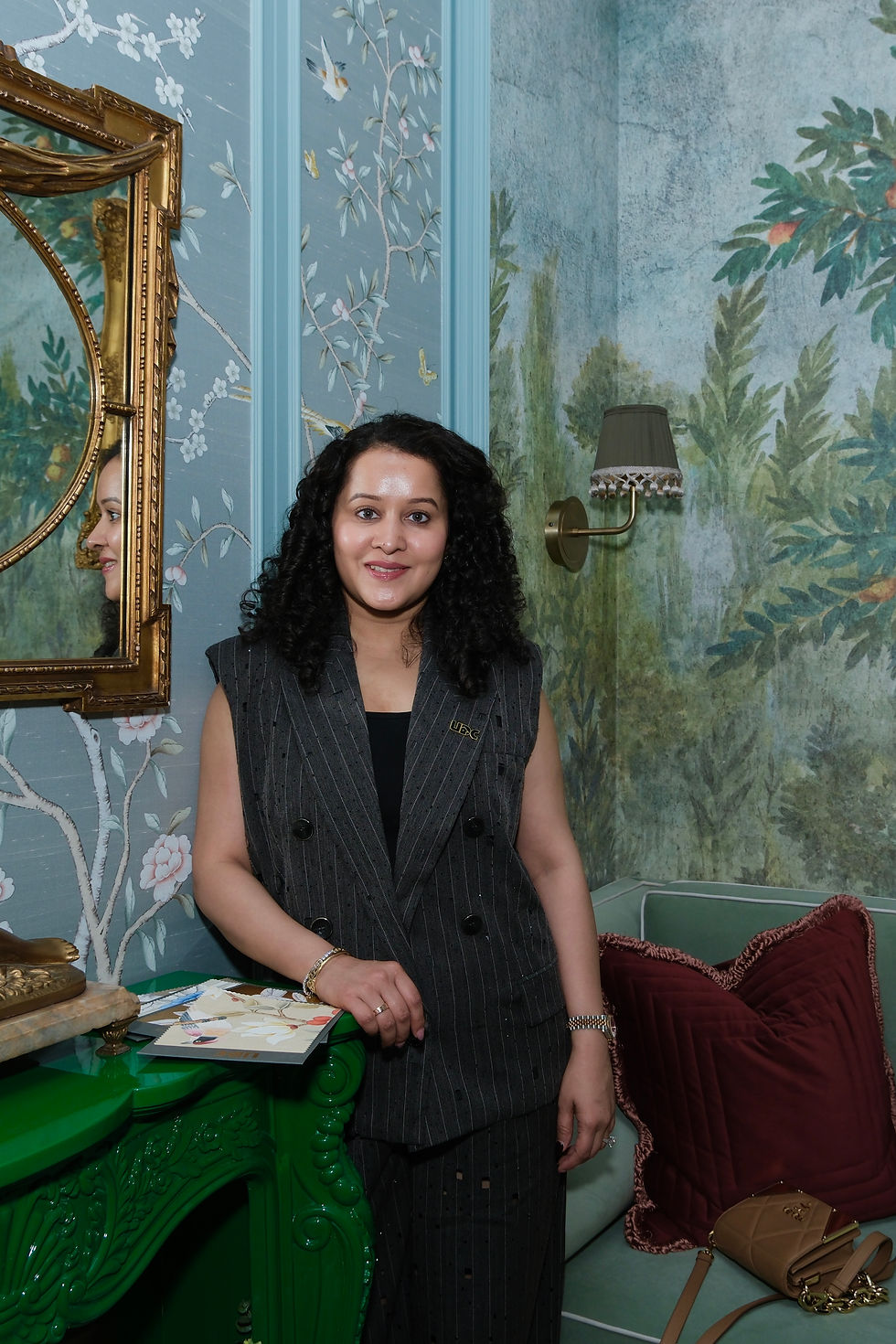
Ar. Abhinav Goel—Principal at RMJM- Milano & Mantova, Italy

Ar. Abhinav Goel, Principal at RMJM, belongs to a generation of architects whose practice has been shaped by movement across geographies rather than allegiance to one. His work sits at the intersection of technology, narrative, and place, informed by early experimentation, international collaborations, and hands-on exposure to diverse architectural cultures. In this conversation with Alisha M for Design Diary International, he speaks about finding direction during uncertain beginnings, the importance of listening before designing, and why architecture, for him, is ultimately about belonging rather than authorship.
You entered global architectural practice very early in your career. When you first chose architecture, what did you believe the profession was about, and how has that belief shifted as you’ve worked across different cultures, geographies, and project scales?
I don’t think I consciously chose architecture in the beginning. I was more interested in the idea of serving people through design, of shaping environments that could quietly improve everyday life. Architecture, over time, revealed itself as the medium through which that instinct could take form.
Early on, I believed the profession was primarily about authorship and form. A client would present a brief, and the architect’s role was to translate that into a building, a resolved object with a clear identity. That understanding was relatively straightforward, and in many ways, comfortable.
Working across cultures, geographies, and scales gradually dismantled that belief. I began to realize that architecture is rarely just about making a building. It has the capacity to act as a community generator, a social framework, and at times a cultural mediator. The focus shifted from producing an object to shaping relationships between people, climate, landscape, and time.
Today, I see architecture less as an act of assertion and more as an act of listening. Listening to the memories embedded in a place, the rhythms of daily life, and the silences that often go unnoticed. In that sense, architecture becomes a dialogue rather than a declaration, one that unfolds slowly and gains meaning through use rather than image.

Your trajectory suggests patience rather than speed. Was that a conscious decision from the start, or did it emerge as you encountered the realities of practice, collaboration, and responsibility?
Patience was not a conscious decision at the start. It emerged through practice. Architecture has a way of slowing you down whether you intend it or not. Projects unfold over long timelines, shaped by collaboration, responsibility, and constraints that rarely align with urgency.
At the same time, it is important to acknowledge that for clients, time is money. Architecture operates within economic and commercial realities, and patience cannot come at the cost of indecision. I believe the real challenge lies in finding the balance and understanding when to slow down thinking and when to move decisively. That balance only works when there is trust and a shared understanding between client and designer, where both move forward together rather than in opposition.
Working within a highly competitive, often cutthroat profession has reinforced this clarity. Speed alone does not create value, but neither does hesitation. Over time, patience became less about delay and more about judgement. It is about knowing which decisions require reflection and which demand momentum, always with the client’s interest and the long-term impact of the project in mind.
Was there a moment early on, perhaps a project that failed, stalled, or challenged you, that fundamentally changed how you think about architecture not as an idea, but as something that affects people, cities, and time?
This is not something I would place only in my early years. It continues to happen even today. Projects stall for internal reasons, briefs change direction entirely, or clients begin without a clear vision or an understanding of what architecture demands. These moments are not exceptions. They are part of practice.
What these situations have taught me is that the role of the architect extends beyond design. We are often educators, helping clients understand process, consequence, and long-term impact. When expectations shift or clarity is missing, architecture becomes less about delivering a fixed outcome and more about guiding a conversation.
I have come to see these moments not as failures, but as constructive interruptions. They force reflection and adjustment and often lead to more grounded outcomes. Architecture operates within cities and communities long after a project is completed, or even if it never is. Each stalled or challenged project becomes a learning curve, sharpening judgment and reinforcing the responsibility we carry toward people, place, and time.

RMJM carries a strong legacy and a global design language. As a Principal in the Milano studio, how do you navigate contributing to that lineage while also developing and protecting your own architectural voice?
I see legacy as something that offers direction rather than constraint. RMJM’s strength lies in its global outlook, technical depth, and long experience across cultures and scales. One idea that resonates strongly with me is the studio’s approach of thinking globally while designing locally. It allows projects to benefit from a collective international intelligence while remaining deeply aligned with their specific context. Within that framework, my own voice develops through approach rather than signature. It comes through how I read a place, how I engage with teams, and how decisions are guided from early intent to execution.
In a global practice, individuality is not protected by insisting on difference but by remaining consistent in judgment and process. As a Principal in the Milano studio, my role is to contribute to that shared knowledge while ensuring that each project responds meaningfully to its local vernacular, climate, and social fabric. When global perspective and local specificity are held in balance, institutional lineage and personal voice do not compete. They reinforce one another.
You’ve worked across Europe, the Middle East, and Asia. When operating at this international scale, how do you ensure that your work remains rooted in place rather than becoming generic or transferable?
The risk of generic architecture increases as work becomes more international. The only real safeguard against that is attention. Attention to place, climate, material memory, and the cultural landscapes that exist beyond the immediate site. A project like the Sanko Headquarters in Turkey reflects this approach clearly. While the building is contemporary in its language, its spatial idea is deeply rooted in the local context.
The central full-height atrium draws inspiration from the fairy chimneys of Cappadocia, creating an internal wadi that brings light, air, and a sense of carved depth into the heart of the building. This was not a visual reference but a spatial one, translating geological memory into lived experience.
Materially, the decision to fully clad the building in stone was equally intentional. In a business district dominated by glass boxes that follow convention rather than tradition, stone becomes a quiet but bold statement. It challenges its surroundings while remaining anchored in the material culture of the region.
Working globally does not mean producing universal answers. It means developing a sensitivity that allows architecture to respond differently each time. When a project is truly rooted in its place, it cannot be lifted and placed elsewhere without losing its meaning.

In a large multidisciplinary practice, leadership is often less visible than design authorship. How do you personally define your role as a Principal, and where do you feel you make the most meaningful impact?
In a large multidisciplinary practice, leadership is often less visible than authorship, and I believe that is as it should be. Architecture, at its core, is a collective act. While strong ideas matter, they only gain strength through collaboration, dialogue, and shared responsibility. I do not see my role as separate from design. It begins with shaping the core concept of a project and continues through refining and polishing it as the work evolves.
Design ideas are developed through constant exchange with teams, engineers, consultants, and clients, and my contribution lies in guiding that process, knowing when to push an idea forward and when to step back and allow it to grow through others. Buildings may carry a name or a brand, but behind every project lies the work of many individuals whose efforts are often unseen. Architecture is never the result of a single author. Acknowledging the many hands behind the scenes is essential, both for the integrity of the work and for how the profession understands itself.
Architecture today is deeply collaborative and technologically complex. What does authorship mean to you in this context, and how do you decide which ideas must be protected and which must evolve through collaboration?
Authorship today is less about ownership and more about intent. In a collaborative and technologically layered process, the architect’s role is not to control every outcome but to remain clear about what a project is fundamentally trying to achieve.
Certain ideas need protection, particularly those rooted in place, spatial logic, and the core narrative of a project. These form the backbone of the work and give it coherence. Other aspects are meant to evolve, and their success often depends on collaboration with the right people. Selecting consultants whose expertise aligns with the ambition of the project is itself a critical design decision.
When collaboration is intentional, ideas are strengthened rather than diluted. Technical systems, details, and even spatial strategies improve when they are shaped through informed dialogue. For me, authorship lies in recognizing where clarity is essential and where openness allows the work to grow. When that balance is achieved, collaboration becomes a source of strength rather than compromise.
Your work reflects a strong balance between digital precision, craft, and context. At what point does technology stop serving architecture and begin to dominate it, and how do you guard against that shift?
Technology stops serving architecture when it begins to dictate ideas rather than support them. Digital tools, including emerging applications of artificial intelligence, are extremely powerful in managing complexity, speed, and visualization. The risk arises when reliance on these tools replaces human judgement instead of sharpening it.
We are increasingly seeing practices lean heavily toward AI-generated imagery and automated processes. While these can be useful, they can also be deceptive. Visually compelling images may suggest depth or innovation, but without critical thinking, material understanding, or contextual grounding, they risk diverting projects away from meaningful ideas. At that point, technology begins to lead rather than assist.
I try to guard against this by constantly grounding digital decisions in lived experience. Every tool must translate into light, material, climate, and human use. Architecture ultimately exists beyond the screen. When technology is treated as a means rather than an authority, it allows precision and efficiency to coexist with intuition, craft, and responsibility.
Sustainability is frequently discussed at a conceptual level. In your everyday practice, what are the principles or decisions you refuse to compromise on when it comes to responsible design?
While certifications and standards play an important role, sustainability cannot be fully understood through checklists alone. These frameworks are valuable because they set benchmarks and hold the industry accountable, but stopping there misses the deeper essence of what makes a building truly sustainable. For me, sustainability is a way of living that people should feel in their everyday lives.
Shade on a hot day, air moving naturally through a room, a garden that becomes part of daily routine, or a plaza that invites people to gather. These are forms of sustainability that are experienced rather than measured. I sometimes think of this as emotional sustainability. It is about creating spaces that people want to return to, that offer comfort, ease, and connection over time. These qualities may not always appear in a technical audit, but they are what allow architecture to endure, both in memory and in use.
At the same time, responsible design also requires discipline. Orientation, passive comfort, material longevity, and integration with landscape are decisions I do not compromise on. Many vernacular traditions carried this wisdom long before sustainability was formalized as a term. Our task today is to bring those lessons into the present, combining them with contemporary innovation and established guidelines, so sustainability remains both practical and cultural, both technical and human.
Inevitably, there are moments when budget, regulations, or client ambition collide with architectural intent. How do you approach these points of tension without diluting the core idea of a project?
Many of the buildings we admire most, churches, monuments, and civic landmarks, were born from ambition rather than limitation. They remind us that architecture has always aspired to reach beyond the immediate. At the same time, contemporary practice operates within very real economic and regulatory frameworks, and acknowledging those realities is part of being responsible.
The challenge is not the presence of limits, but how clearly they are understood. I believe it is crucial for budgets to be discussed openly and early in the design process. When architects are asked to imagine freely without an understanding of financial boundaries, and those boundaries emerge later, it can create unnecessary tension.
Expecting the same architectural ambition to survive unchanged under newly revealed constraints makes the process volatile for everyone involved. I have found that projects often gain strength through this process. Constraints force focus, and focused ideas tend to endure. By engaging openly with clients and authorities, and by explaining the long-term value of certain decisions, it becomes possible to navigate these pressures while preserving the essence of the architecture.
As an architect of Indian origin working within a European studio, has cultural duality shaped how you read space, material, or social behaviour, even when designing outside familiar contexts?
Cultural duality has shaped the way I observe more than the way I impose. Growing up in one context and practicing in another makes you aware that space is never neutral. It carries social codes, rituals, and expectations that are often unspoken but deeply felt.
Coming from an Indian background, I am perhaps more attuned to density, informality, and the layered use of space, how public and private often overlap, and how architecture accommodates life rather than controls it. Working within a European studio, on the other hand, has reinforced clarity, precision, and the discipline of structure and process. The dialogue between these perspectives has sharpened my sensitivity rather than pulling me in one direction. This awareness also becomes important within a team. What feels common or ordinary in one cultural context may carry very different meanings in another.
Part of my role is often to bring that awareness into the design process, to question assumptions and encourage conversations around how spaces are read and used differently. When teams understand these nuances, architecture becomes more informed, respectful, and resilient across contexts. When working outside familiar settings, this duality encourages caution and curiosity. Instead of assuming what a space should be, I spend more time observing how people gather, pause, or move through it. Cultural duality does not offer ready answers. It trains you to ask better questions, which I believe is essential when designing anywhere in the world.
Have there been instances where working in an unfamiliar cultural or geographic setting forced you to unlearn certain assumptions about design, and what did that process reveal to you?
Yes, very clearly. Working in unfamiliar contexts has often required unlearning assumptions that felt solid at a distance but dissolved once I was physically present.
I remember an invited international competition in Ethiopia, where I arrived confident in both the design approach and the architectural language we had developed. That confidence was quickly challenged. On the ground, it became evident that many decisions were driven almost entirely by financial feasibility. No matter how carefully or passionately a design was defended, the realities of cost, availability, and construction logistics ultimately shaped what was possible. That experience reinforced the importance of visiting the site.
Drawings, data, and remote understanding can never fully replace physical presence. Being there reveals priorities, constraints, and cultural realities that cannot be sensed from afar. It also taught me humility. Architecture must respond to lived conditions rather than ideal scenarios.
What this process revealed is that unlearning is not a loss of knowledge but a refinement of it. Presence forces architecture to move from confidence to clarity, grounding ideas in reality and making them more responsible and meaningful.
Architecture is often romanticized, but practice is slow, demanding, and sometimes invisible. What sustains you through long project cycles where progress is incremental and recognition delayed?
What sustains me is an understanding of process and time. Architecture does not unfold instantly. It requires trust, not only from the architectbut also from clients, consultants, and teams alike. One has to believe in the process and reflect that belief consistently. Without that shared trust, long projects become difficult to sustain. I often remind clients and collaborators that the scale of ambition is directly linked to time. Larger, more complex projects demand patience, coordination, and repeated refinement.
A project we are currently working on in Dushanbe, Tajikistan, which is intended to become the tallest skyscraper in Central Asia, is a good example. The ambition is significant, and with that comes a long and demanding journey. That is simply the nature of meaningful architecture. What keeps me grounded is accepting that this slowness is not a weakness but a condition of building responsibly. Progress may feel incremental, but it is cumulative. Seeing ideas mature, align, and eventually translate into spaces that people inhabit makes the waiting worthwhile. Architecture rewards those who trust the process and stay committed to it over time.
Outside of architecture, are there experiences, disciplines, or observations from everyday life that quietly influence how you think about space and design?
Much of what influences my thinking comes from everyday observation rather than formal disciplines. Watching how people occupy space, how they gather, pause, adapt, or make places their own, often teaches more than any reference book or precedent study.
Walking plays an important role for me, particularly because it reveals how differently cities are designed for the human body. Many European cities allow walking as a natural part of daily life. Streets are scaled, connected, and safe enough to be experienced slowly. In contrast, large parts of the Asian urban context are still not equipped with continuous walking infrastructure or safe passages, making movement more fragmented and often hostile to pedestrians.
This contrast has sharpened my awareness of how deeply urban design affects behaviour and dignity. Literature, conversations, and moments of quiet observation further influence how I think about space, memory, and time. These everyday experiences remind me that architecture and cities should first serve the human pace, not just efficiency or movement.
Looking ahead, what kind of work are you most drawn toward now, whether in terms of typology, scale, geography, or unresolved questions you still want to explore?
I find myself increasingly drawn toward work that prioritises vision, creativity, and sensitivity over ego, power, or status. While architecture inevitably operates within business realities, what motivates me personally are projects that engage with human experience at its most vulnerable and meaningful moments.
Typologies such as education and healthcare are especially compelling to me. These are spaces that demand far more than spatial problem-solving. They require emotional intelligence. How does a child feel when they step into a school or kindergarten, a place that becomes an extension of parental care? How does a person experience space in the final days of their life, when architecture must offer dignity, calm, and reassurance rather than spectacle?
At the same time, we can approach even large-scale and high-intensity projects with the same sensitivity. We are currently designing stadiums for an undisclosed client where the ambition extends well beyond sport or a single event. A stadium may host only a few games each month yet remain inactive for the rest of the year. By integrating additional programs such as markets, health clinics, and eateries, these buildings are conceived to operate as urban generators. They remain active beyond match days and function not only as venues but also as independent civic spaces woven into everyday life.
Alongside this, there are unresolved questions that continue to keep me engaged. What makes architecture timeless rather than merely relevant? Are there limits to being limitless, or does restraint ultimately give architecture its endurance? And as design becomes increasingly reliant on artificial intelligence, how do we ensure that human judgement, empathy, and intuition remain central to the process? Looking ahead, I am most interested in work that treats architecture not as an object of power but as a framework for care, continuity, and shared life.
Do you imagine your future continuing within a large global practice, or is there a point where you see yourself building something more personal, rooted, or independent?
I don’t see these paths as opposites. Large global practices offer scale, complexity, and the ability to engage with projects that carry long-term impact. At the same time, meaningful architecture often demands intimacy, flexibility, and a deep connection to context. This is where I value the way our studio operates. RMJM functions as a global practice, but with the ability to work as a boutique studio when a project or context demands it, while still drawing on a wider international network when needed. That balance feels important to me. It allows ambition and sensitivity to coexist rather than compete.
Looking ahead, what matters most is not the label of the practice, but the freedom to work with intent. Whether within a global framework or a more focused setting, I am interested in environments that allow thoughtful engagement, continuity of ideas, and architecture that remains grounded in people and place.
When you look ten years ahead, how would you define success for yourself, and what do you hope remains consistent in your way of thinking even as your practice evolves?
For me, success ten years from now would not be measured by scale, visibility, or numbers alone. It would be defined by the quality of work produced and the integrity with which it was made. If the architecture I am involved in continues to feel responsible, grounded, and relevant to the people who inhabit it, that would matter far more than external markers of achievement. I would hope that what remains consistent is my way of thinking rather than any particular outcome.
Curiosity, humility, and the willingness to listen must stay central to people, to place, and to context. As practice evolves, tools change, and responsibilities grow, that mindset becomes even more important. If, over time, the work is able to balance ambition with care, innovation with restraint, and global reach with local sensitivity, I would consider that a meaningful form of success. Architecture, for me, should age with dignity, and so should the thinking behind it.
Finally, when young architects look at international practice from the outside, what is the one misconception you would most like to correct based on your own experience?
One of the most persistent misconceptions is that international practice is defined by speed, glamour, or visibility. From the outside, it can appear decisive and image-driven. In reality, it is built on patience. Projects unfold slowly, shaped by distance, dialogue, uncertainty, and responsibility long before they take physical form.
What is often underestimated is the weight that comes with working at an international scale. Greater reach brings greater expectation. Every decision carries cultural, social, and long-term consequences, often in contexts far removed from one’s own. The work demands restraint, consistency, and an acceptance that progress is rarely linear. Much of the effort remains invisible, but it is precisely that unseen labor that gives architecture its credibility.
I would encourage young architects to understand international practice not as an acceleration of success but as an extension of responsibility. It is not about being everywhere, but about being attentive wherever you are. Those who endure are not driven by spectacle or recognition but by patience, humility, and a commitment to learning over time. In the end, architecture that matters is not announced loudly. It is built carefully, sustained quietly, and understood slowly.
You May Also Like