.png)


Why Vanilla Is the Second Most Expensive Spice on Earth
We use the word vanilla to mean ordinary, the safe and unremarkable choice. It is one of the least accurate things the English language does, because vanilla is the second most expensive spice in the world, and almost every pod of it is pollinated by hand.

Open a jar of good vanilla and the room changes before you have done anything with it. The scent arrives warm and dark and slightly boozy, sweet without being sugary, with a smokiness underneath that perfume houses have chased for centuries and bakers treat with something close to reverence. It is the smell of expensive ice cream and old libraries and the base note of half the fragrances on a luxury counter. For something the world has agreed to call plain, vanilla has an extraordinary hold on the senses, and the people who work with it seriously will tell you that no two pods smell quite the same, that a fine Madagascar bean carries notes a laboratory has never fully managed to bottle.
That gap between what vanilla actually is and what its name has come to mean is the strange thing about it. Somewhere along the way the word slipped into the language as a synonym for beige, for the unadventurous, for the flavor you pick when you would rather not have an opinion. The truth is closer to the opposite. After saffron, vanilla is the most expensive spice traded anywhere in the world, and the reason has very little to do with the plant being rare and almost everything to do with how much human care each pod demands before it reaches you.

The plant is an orchid, Vanilla planifolia, and it belongs to Mexico. There it is pollinated by a single native insect, the stingless Melipona bee, which evolved alongside the flower over a very long time, and the bloom itself carries a small internal flap called the rostellum that keeps its male and female parts apart and makes self-pollination difficult. For close to three hundred years this quiet piece of botany held vanilla in place. Spanish colonists carried cuttings out of Mexico and planted them across the tropics, in Réunion and Mauritius and Madagascar and the East Indies, where the vines grew and flowered beautifully and produced almost nothing, because the one insect that could complete the act had been left behind on another continent.

The lock finally gave way in 1841, on the island of Réunion, and the person who broke it was a boy of around twelve who had been born into slavery and would later be given the name Edmond Albius. He worked out a way to do by hand what the bee did by instinct, lifting the rostellum with a thin sliver of bamboo and pressing the flower together with a small movement of the thumb, a technique that took only seconds and that remains, with barely any alteration, the method used on vanilla farms across the world this morning. Albius was freed when France abolished slavery, spent the rest of his life working as a kitchen servant, and died poor, and although a botanist later tried to claim the discovery as his own, the records eventually came down on the boy's side. He was never rewarded in any real way for a technique that made a global industry possible, and that quiet distance between the hands that do the work and the people who take the profit has followed vanilla ever since.
Much of what makes the spice so costly comes down to the temperament of the flower. A vanilla bloom lasts a single day, sometimes less, and a vine is unhelpful enough to open only a few flowers at a time across several weeks rather than all at once, so there is no way to pollinate a plantation in one efficient sweep. Instead, for the whole of the flowering season, someone walks the vines at first light every single morning, moving along them flower by flower, pollinating each new bloom by hand before it closes for good, a skilled worker managing perhaps a thousand or more before the day warms. A flower missed in its one day is simply gone, and with it every month of growth and every gram of value it would have carried.

The pod that does form is only the beginning of the labor. It spends around nine months ripening on the vine, and then enters a curing process that can run for several months more, in which the green beans are blanched and left to sweat and then slowly dried and conditioned, handled and turned and sorted and graded again and again by people who know how to read them, until they darken and soften into the glossy, fragrant pods a buyer will recognize. It takes something in the region of seven kilograms of green vanilla to yield a single kilogram of finished beans, and not one step of it can be handed to a machine, because the pods are too small and too delicate and too different from one another to be trusted to anything but human judgment. What you are paying for, when you pay for real vanilla, is that attention, given over and over from the flower to the jar.
Nearly all of it comes from one place. Madagascar grows the majority of the world's natural vanilla, well over half in most years and, in strong ones, close to eighty percent of the supply the flavor industry actually leans on, and within Madagascar the growing tightens further into a single northeastern region known as SAVA, a name drawn from the four towns of Sambava, Antalaha, Vohémar and Andapa. It is a remarkable amount of the world's supply resting on one stretch of coast in one of the poorest countries on earth, which is why a storm there is read as a global event. When Cyclone Gamane crossed the region in 2024 it was treated as a supply shock far beyond Madagascar, because the vines are exquisitely fragile, rotting in too much rain, drying out in too little, and stripping bare in a strong enough wind.

The price behaves accordingly, less a market than a series of lurches. By most industry estimates a kilogram of vanilla climbed to around five hundred US dollars in 2003 and 2004, fell to a fraction of that within a few years, rose again to a peak near 2018 that some accounts placed close to the price of silver by weight, and then dropped so steeply that by 2023 many farmers were reportedly parting with green vanilla for a couple of euros a kilogram, less than it had cost them to grow. Because a vine needs three to four years from planting to its first flower, a grower who plants in a boom often harvests into a slump, and when the price falls far enough some tear out their vines and plant rice they can eat instead, which thins the supply and lifts the price again some years later, and so the whole cycle turns once more, always heaviest on the growers who can least absorb it.
When the price is high the crop turns into something worth stealing, a single season's beans standing in for a family's entire year of income and hanging, unguarded, in an open field. So the growers do what people have always done with something precious, sleeping out among the vines through the harvest, picking the pods early before they are fully ready simply to get them in before someone else can, and in some places pressing tiny identifying marks into the green skin so that a stolen bean might later be known. It is the kind of security you would expect around a vault, arranged instead around a flavoring.
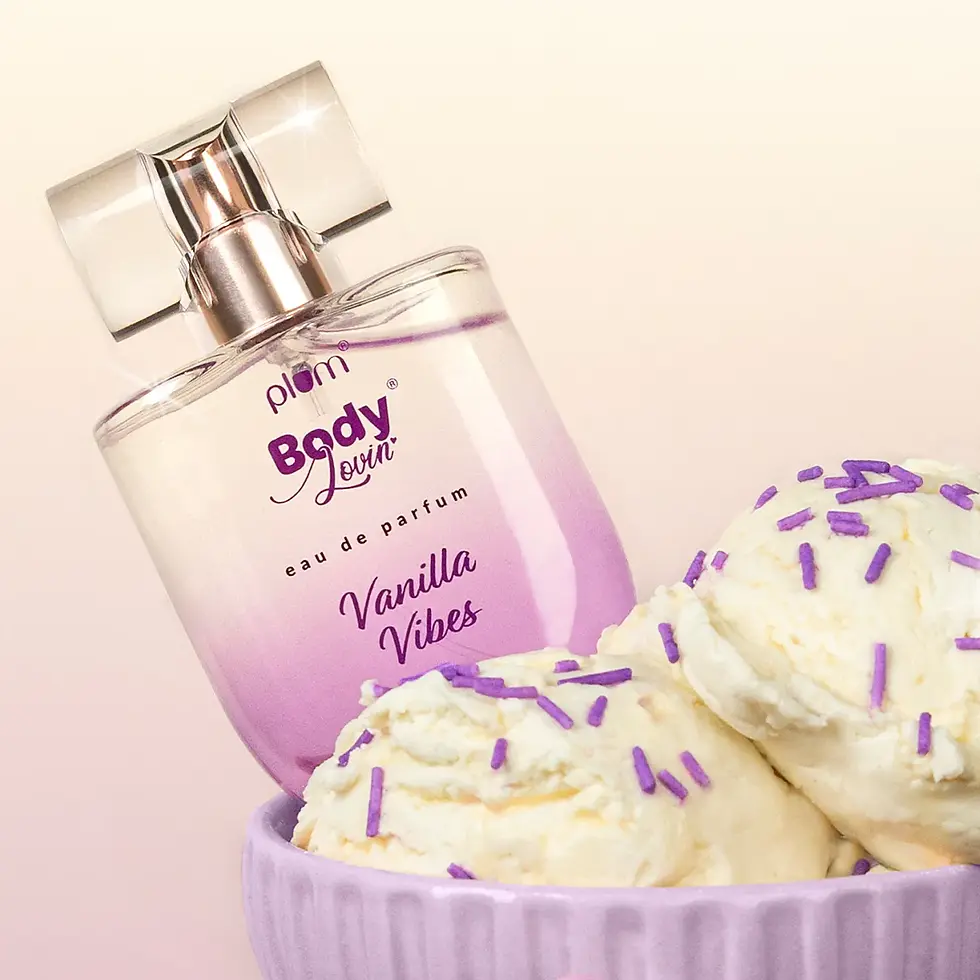
None of this has stopped the world from trying to manufacture its way around vanilla, and most of what now passes for the flavor is synthetic vanillin, produced far more cheaply and far more predictably than the real spice will ever allow. Natural vanilla holds on beside it because the imitation catches the loudest note and misses everything around it, the hundreds of smaller compounds that a properly cured Madagascar pod carries and that no factory has quite reproduced, and there are enough people who can tell the difference, and who will pay for it, to keep the entire fragile arrangement alive. That is the paradox worth holding on to the next time vanilla is offered up as the dull and dependable choice. Behind the plainest word on the menu sits a Mexican orchid that refuses to breed abroad, a method invented by an enslaved child who was never paid, a flower that has to be caught on its single open day, the better part of a year on the vine and months more in the curing shed, and one exposed coast carrying much of the world's supply.
KNOWING THE REAL THING: A READER'S GUIDE TO VANILLA
Extract, essence, and how to tell what you are actually buying
The single most useful thing to understand about vanilla is that the price tells you the truth more reliably than the label does. Real vanilla is costly to produce, so anything carrying its scent or flavour cheaply has almost certainly been made without much of the actual spice in it. Here is how the terms break down, and what they mean across the different ways vanilla shows up in a home.
In food- Vanilla beans, sometimes sold as pods, are the actual cured fruit of the orchid, and they are the real and expensive thing, usually a few hundred rupees for a single good bean. Vanilla extract is also real: it is made by steeping genuine vanilla beans in alcohol and water so the flavour draws out over time, and a proper bottle reflects that in its price, typically well above a thousand rupees. Vanilla essence is the budget alternative and is usually synthetic, built mostly from manufactured vanillin rather than the bean itself, which is why it can sell for as little as fifty to two hundred rupees. Essence will give you the one loud note of vanilla, but not the rounded, layered warmth that real extract or a whole bean carries. As a rule of thumb, if a bottle labelled vanilla costs less than a couple of hundred rupees, you are buying essence, not the spice.
In beauty- The word vanilla appears constantly on perfumes, body creams, lip balms and hair products, and here it is worth knowing that most of that scent is synthetic, and legitimately so. Genuine vanilla absolute, the concentrated form used in fine fragrance, is one of the more expensive raw materials a perfumer can reach for, so it tends to appear only in higher-end scents, often listed as vanilla absolute or by its compound name. In everyday beauty products, the vanilla smell is almost always a lab-made recreation. That is not a scam in itself, since synthetic vanilla is safe and widely used, but it does mean the word vanilla on a drugstore lotion is describing a fragrance, not an ingredient of any real value.
In home fragrance- The same logic runs through candles, diffusers and room sprays. A vanilla scented candle at a mass-market price is carrying synthetic vanillin, not extract, and there is nothing wrong with that as long as you know it is what you are paying for. The premium candles and diffusers that use richer, more natural vanilla notes cost considerably more, and the difference is usually noticeable: the cheaper versions smell sweet and flat, the better ones smell warmer, darker and more complex, closer to the bean itself.
Real vanilla is expensive because it is difficult to grow and cure, so the moment it turns up cheap, in any category, it is almost certainly the synthetic version wearing the name. Knowing that will not stop you buying essence or a scented candle, and it should not, but it does mean you will never again mistake the imitation for the real thing, or overpay for a product trading on a word rather than the spice behind it.
Fact box — Vanilla, by the numbers
Vanilla is the second most expensive spice in the world, ranking just behind saffron.
A vanilla flower stays open for only a single day, and that is the one window in which it can be pollinated.
In 1841, a boy of around twelve named Edmond Albius invented the hand pollination method on the island of Réunion.
It takes roughly seven kilograms of green vanilla to produce a single kilogram of cured beans.
Madagascar grows between 50 and 80 percent of the world's natural vanilla, with the exact share shifting from year to year.
The SAVA region, made up of the four towns of Sambava, Antalaha, Vohémar and Andapa, anchors most of the world's vanilla supply.


