.png)


Nanotechnology in Interior Design: The Future of Surface Protection Explained


In the finest spaces, the difference between a room that endures and one that simply ages often comes down to something you cannot see, cannot touch, and will almost certainly never think about. Vetro Power, an Indian nanotechnology company founded by entrepreneur Varun Mukhi, focuses its practice on exactly that.
Ask anyone who works seriously in luxury interiors what the most overlooked element of a premium space is, and you will rarely get a satisfying answer. The conversation tends toward materials, craftsmanship, light, and proportion. What you will almost never hear is the honest admission that the most important decision in any space is often made long after the designer has left and the photographs have been taken.
Varun Mukhi grew up in a family connected to both the textile and chemical industries, which gave him an early and particular curiosity about how materials behave over time—not how they look when they are new, but what happens to them as the years accumulate. When he began working closely on interiors and hospitality projects, he kept running into the same frustration. The design would be flawless. The materials were chosen with genuine intelligence and care. And then, as he puts it plainly, daily life would slowly take over. Premium projects across Mumbai and Delhi would begin aging within months of completion. High footfall, humidity, food spills, harsh cleaning chemicals, and much more all extract a steady toll that no amount of careful specification can prevent, unless the question of protection has been asked at the right moment, which it almost never is.
The gap between aesthetic intent and long-term performance is precisely where his work lives. Through Vetro Power's Nano-Tech Services division, he applies nanotechnology-based protection systems to some of the most demanding surfaces in the country, including the upholstered suites of five-star hospitality groups, the fabric wall panels of cultural institutions, and the stone, silk, and hand-knotted carpets of private residences where the investment in material is significant and the tolerance for deterioration is essentially zero. The argument he makes, quietly and without drama, is that protection is not an add-on. It is part of the space's life cycle. If you care about design, you have to care about durability. Reactive care, he says, is always more expensive and more painful than preventive protection.
Before Mukhi recommends any treatment for any surface, he proceeds by understanding the material science. How porous is the surface? How does it react to moisture? What cleaning procedures are being followed? Then he studies usage patterns. Is it a hotel lobby sofa used by hundreds of guests daily or a private residence with light usage? He also reviews existing maintenance practices, because aggressive cleaning often causes more damage than spills. Only after evaluating all these factors does he recommend a system. It must work in real life, he says, not just in theory. This diagnostic rigor is what separates a genuinely useful protective treatment from the kind of product that performs impressively in a laboratory and fails quietly in an actual room.
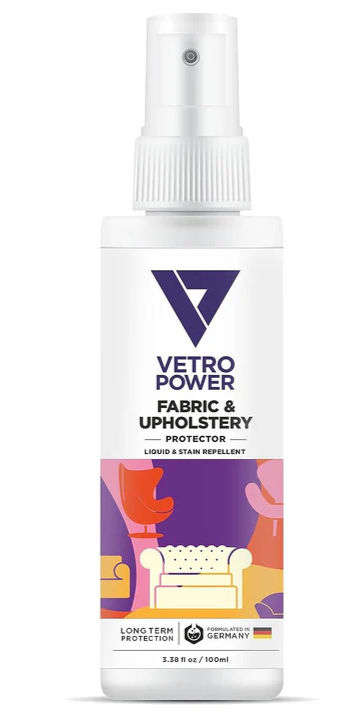
The technology itself operates at a level invisible to any unaided eye. Rather than forming a film on the surface of a material, which is how older protective coatings worked and why they were rightly distrusted by anyone who cared about how fabric actually feels, the treatment bonds at the nanoscale, altering the relationship between the surface and whatever comes into contact with it. In the case of fabric, nothing changes in any perceptible sense. Linen still breathes. Wool remains soft. Leather ages as it should. Silk retains its particular quality of light and drape. There is no change in texture, color, or odor. What changes is performance. Liquids form higher wetting angles and bead or flow away rather than penetrate. Thicker, less viscous substances that would otherwise permanently stain can often be cleaned with neutral cleaners when protected properly. Mukhi calls it, simply, invisible performance enhancement, which is as precise a description as the concept requires.
The misconceptions that surround this category of work are worth addressing directly because they have for years prevented the conversation from happening at the right stage of any project. Many people assume that coatings will make fabrics stiff, glossy, or synthetic-feeling. That was true of older technologies. Modern nanotechnology systems are designed to remain invisible. Another misconception, perhaps the more consequential one, is that protection eliminates the need for cleaning. It does not. It makes cleaning less aggressive and more efficient, which over the lifetime of a fine interior is an argument worth understanding. The industry is also largely unregulated, meaning anyone can make online claims about being nano or non-toxic. Clients need to look for credibility, ask for real test results, global certifications, and track record.
Natural materials occupy a special place in this conversation because they are both the most prized surfaces in any luxury context and the most vulnerable ones. Natural materials require respect, as Mukhi frames it. The treatment must not block breathability or alter texture. Linen should still breathe, wool should remain soft, and leather should age naturally. Some materials respond extremely well, showing strong repellency, while others behave differently. More than the product itself, it is the knowledge of materials and the accumulated data from years of working across every category of premium surface that has built the trust his practice operates on.
The distinction between hospitality and private residential work is one Mukhi understands from years of operating in both. Hospitality operates at scale and under constant pressure. Spaces are used every day, and brand perception depends on consistency. There is very little margin for visible wear. In busy settings, even small improvements in resistance can greatly extend the lifecycle of interiors, reducing replacement frequency, operational downtime, and long-term maintenance expenses. Protection systems reduce the absorption of spills and contaminants, which allows housekeeping teams to clean surfaces more gently and efficiently, reducing fiber stress and surface wear over time. In private homes, usage is lighter, but expectations are personal and emotional. The investment is often more significant, and the attachment to the original condition of the space runs deeper. Budget sensitivity is real in hospitality because protection is invisible and its value is realized over time rather than immediately. That trust, Mukhi says, has been built through performance.
The broader argument around protective chemistry has become more sophisticated in recent years, partly because clients have also become more sophisticated. Post-Covid, clients now ask detailed questions about toxicity, fumes, indoor air quality, and long-term exposure that would have been considered unusual five or six years ago, when price was often the primary and occasionally the only concern. Today, clients weigh safety and compliance equally. Social media and greater access to information have made stakeholders more aware and more demanding in a positive way.
What most people miss when they consider surface protection is that stain resistance is the most visible benefit but far from the most significant one over the longer arc of a space's life. Protection also helps preserve color consistency, slow fiber degradation, offer some UV resistance in certain applications, and diminish the need for harsh cleaning chemicals. Over time, that translates into less material damage, lower maintenance intensity, and better overall surface aging. A space that was designed to be beautiful in ten years as well as on the day it opened requires this kind of thinking, and most spaces are designed without this kind of thinking, which is why most spaces age differently than their designers imagined.
The answer to how architects and designers can do their jobs better, Mukhi believes, is to treat protection as part of the material strategy rather than a separate chemical layer. During design discussions, consider how the material will perform over five to ten years. When protection is integrated early, it supports the design quietly without interfering with aesthetics. Ideally it enters the conversation at the specification stage, included in the bill of quantities like any other technical element. When protection is integrated during material selection, it remains effortless and invisible. When added later, it becomes reactive. Early planning ensures the design intent is preserved without compromise.
The future he describes is one where this kind of thinking becomes standard rather than exceptional. Brands have already begun launching pre-treated fabrics and tiles with built-in performance features. As sustainability and longevity become more central to how the design world measures its own success, extending the life of materials will matter more than the frequency of their replacement. Functional performance will increasingly be a selling point in design itself. Pollution, humidity, and heavy use all affect surfaces in India in ways that designers from other climates and other traditions do not always fully account for. Architects and designers create spaces people connect with emotionally. In that context, the role of material science is to create conditions that allow that connection to endure quietly, without announcement, and without ever making itself visible in the years that follow the opening.
The room that holds its character across a decade, that looks in its fifth year the way it looked in its first, that maintains the emotional connection it was designed to create long after the people who specified it have moved on to other projects, is the room that understands this. Not the expense of the materials. Not the reputation of the designer. But the quality of the decision to make something that lasts and the intelligence to protect that decision once it has been made.
You May Also Like


