.png)


Chef Mauro Colagreco of Mirazur on Why He Handed His Three Michelin Star Menu to the Moon

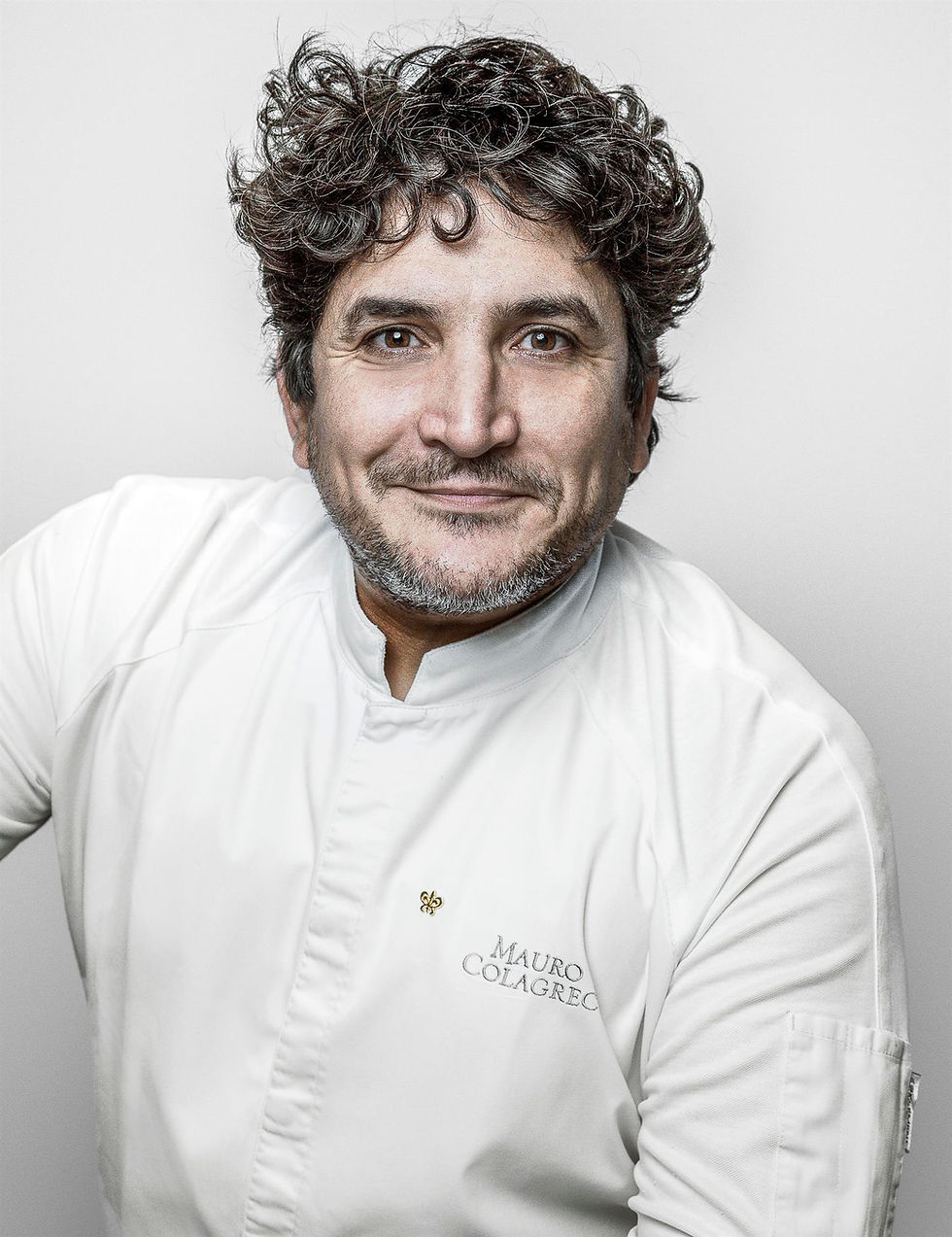
In an exclusive conversation with Shweta for Style Essentials, Chef Mauro Colagreco of Mirazur, who has won everything the industry has to give, speaks about surrendering control to the moon, what a pandemic garden taught him about creativity, and why the most radical thing a three-Michelin-star restaurant can do is stop deciding what you eat.
He did not grow up wanting to be a chef. For four years at university in Buenos Aires he studied economics, dutifully and without particular passion, until the clarity that only wasted time eventually produces made it obvious that his current path was not the life he was built for. He enrolled in a gastronomy school, found his first shift in a friend's restaurant kitchen in the middle of a dinner service, and understood immediately, standing in the heat with the orders coming in and the plates going out, that the particular energy of this work, at once completely concrete and utterly ephemeral, existing fully only in the seconds between the pass and the table, was what he had been looking for without knowing he was looking. He has never once looked back from that moment.

What followed was the kind of formation that does not happen by accident. He arrived in France in 2001 and worked his way through the most demanding kitchens the country had: Bernard Loiseau, Alain Passard at L'Arpège, Alain Ducasse at the Hotel Plaza Athénée, Guy Martin at Le Grand Véfour, four chefs who between them represented the full range of what French gastronomy had understood about itself in the twentieth century. He absorbed it all without becoming any of them, the hardest thing a young cook can do in France, where tradition weighs on every plate.
In 2006, at thirty-one, he opened Mirazur in Menton, a seaside town on the French Riviera thirty metres from the Italian border, in a 1930s villa above the Mediterranean. He had never been to Menton before. He described it later as the place where he found his kitchen and himself, a location so particular, straddling two culinary traditions, facing the sea and backed by mountains, that it made a borderless identity not just possible but inevitable. The first Michelin star came within a year, the second in 2012, and the third in January 2019, making him the first chef not born in France to receive three stars in the French Guide and the first Latin American chef to receive them at all. Six months later, Mirazur was named the best restaurant in the world by The World's 50 Best Restaurants, voted on by over a thousand food professionals across twenty-six regions.


That version of the story ends there, at the summit, which is where most profiles of Mauro Colagreco end. What happened next is the part that has not been properly told, and it is the more compelling story by some distance.
In March 2020, the world stopped. Mirazur closed, and Colagreco found himself with a small team cooking for the healthcare workers of the village hospital, spending his days in the restaurant's garden, the Rosmarino, which was connected directly to where he lived. He was, as he describes it, a close witness of nature, almost locked outside. Day after day in that garden, watching biodynamic principles at work in the soil, speaking with his gardeners, and observing how the moon and planetary cycles moved through the plants, something shifted in him that the previous fourteen years of accumulating accolades had not produced and could not have.
When the question of reopening arrived, it was impossible for me to reopen as if nothing had happened, he says. This moment required a transformation, a deeper commitment. And so the idea was born: to carry a strong message, to see the Earth as a living organism, and to reconnect with our ecosystems. In one month, with the whole team, he rebuilt Mirazur entirely around a biodynamic lunar calendar. The menu now changes daily according to whether it is a root day, a leaf day, a flower day, or a fruit day, determined not by what the chef wants to cook but by the biodynamic calendar and where the moon sits in its cycle. Some guests arrive not knowing which world they will eat in, even if this specific calendar is published on Mirazur's website. Something older and less rational than any culinary training decides for him.
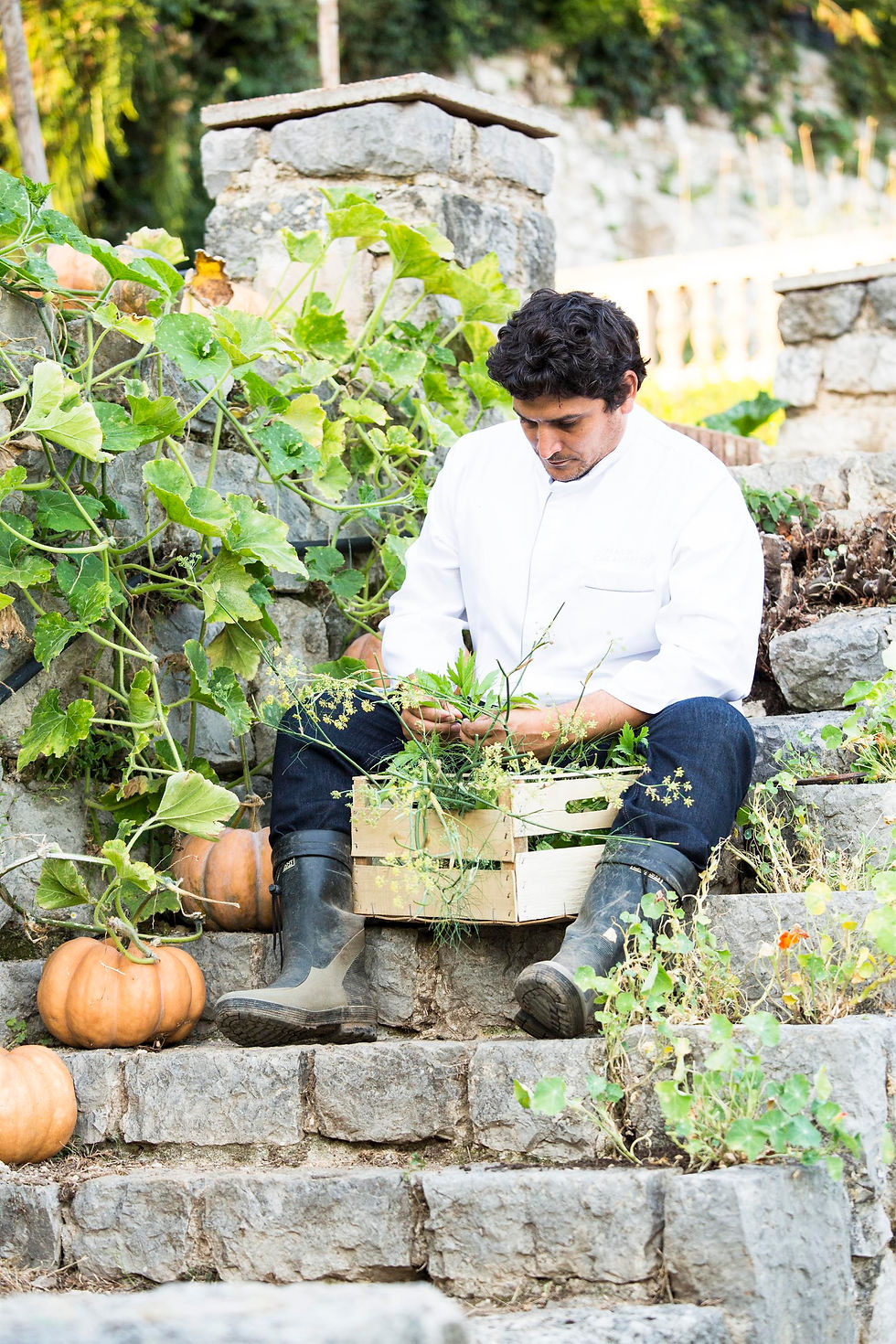
This is the surrender that no school teaches and no star prepares you for. Every chef is trained to control, the heat, the seasoning, the timing, the arc of the guest's experience from the first course to the last, and the lunar calendar introduced a new dimension of creative complexity that no classical training had ever demanded of him — one that required not mastery but attention, not authority but listening. What it gave back was something that twenty years in the finest kitchens in France had not found a way to give him. Direct contact with the soil, he says, especially through permaculture and biodynamics, teaches you to listen, to be patient, and to be flexible. It is this dialogue between a very clear philosophy, respecting natural cycles, and creative freedom that now defines his cuisine. The loss of control, it turns out, was the condition under which genuine creativity became possible.
The garden is not a supplier to Mirazur. It is a collaborator, and the distinction matters enormously to Colagreco, who traces the moment the relationship changed to a specific book. The One-Straw Revolution by Masanobu Fukuoka, the Japanese farmer and philosopher who spent decades arguing that the most sophisticated agriculture is the one that interferes least with what the land already knows how to do, arrived in his hands at exactly the moment he had the opportunity to develop the Rosmarino garden. The principles of permaculture, of cultivated biodiversity, of treating the earth as a living system rather than a production facility, went into the ground alongside the seeds, and step by step the gardens became, as he puts it, the heart of the experience we offer to our guests. The circular gastronomy manifesto that has grown from this work rests on a single idea, rendered as simply as any great principle can be: by choosing what we eat, we choose the world we want to live in.
The breadth of what this philosophy has required of him goes well beyond what most people understand as sustainability. According to the FAO, seventy-five percent of cultivated crop varieties have disappeared in the last one hundred years, and food systems are responsible for approximately seventy percent of global biodiversity loss, numbers that do not sit comfortably alongside a tasting menu and that demand a response from anyone who cooks seriously for a living. Colagreco's response has been to make his research team genuinely multidisciplinary, bringing together cooking, gardening, ethnobotany, archaeology, and anthropology in the same conversation, because understanding a territory and its living systems requires more than culinary training. This is why the recognition he received in 2022 as the first UNESCO Goodwill Ambassador for Biodiversity from the culinary world makes a particular kind of sense. What a chef brings to that conversation that a diplomat or a scientist cannot, he says, is that food is a universal language that concerns everyone every day, and everyone can act through their food choices.
The question of borders has followed Colagreco his entire career, and he has refused it his entire career, not as a political position but as a creative one. He grew up in Argentina, trained in France, cooks on the Italian border, and structures his menu around a Babylonian astronomical system, but he was not trying to build a borderless identity at the beginning. He was trying to build his own identity, his own cuisine, in a place whose geography made borders feel like an invitation rather than a constraint. "Being located between France and Italy gives us the richness of two exceptional culinary traditions, plus the Mediterranean, which is a symbol of exchange and cultural influences," he says, and Mirazur could not exist anywhere else. The refusal of borders, understood in retrospect, was never a refusal, but a recognition. It was a recognition that the most compelling cooking has always happened in the places where cultures meet and negotiate with each other.

Bread arrives at every Mirazur table with Pablo Neruda's Ode to Bread, and this is not a flourish but an intention, as Colagreco is precise about the difference. The sharing of bread sets the tone for everything that follows because it is a reminder that food is also a language, an emotion, and a memory. He traces the gesture to his childhood, to his grandmother welcoming the family with warm bread in a moment that was simple and joyful and complete. Cooking is, above all, an act of love, he says. Welcoming someone and giving them food is a deeply human and almost universal gesture, a way to take care of others and, in a way, to extend their life; beyond feeding and giving pleasure, food creates connection, tells stories, shares values, and reconnects us with others.
He now runs thirty restaurants across twenty destinations, each one starting from a foundation that begins at Mirazur, where every new project starts with an immersion: a team going on site to understand the territory, meet local producers, and imagine a concept deeply connected to its environment. What connects all these places is a shared philosophy that began in that villa above the Mediterranean and has never needed to be revised, only deepened. To keep Mirazur's spirit of innovation and risk-taking alive, he has invested in a dedicated research and development space driven by curiosity, experimentation, and an insistence on local roots that no amount of global expansion has been allowed to dilute.
The chef who left the restaurant did not leave cooking. He left behind a version of cooking that places the chef at the center of every decision, leaving the guest at the mercy of that centrality. What he found on the other side of that departure was something that even the most rigorous classical training in the world had not prepared him for: the discovery that creativity does not require control. It requires attention, not to what you want to make, but to what is already happening in the soil, in the light, and in the position of a moon that has been pulling at the tides and the roots of plants for longer than any culinary tradition has existed.
The guest who sits down at Mirazur tonight does not know what they will eat. Neither, entirely, does the chef. And in that shared unknowing, something becomes possible that no menu written in advance has ever quite managed.
You May Also Like


