.png)


ANOR by Bina Choksi: Building India’s First True Luxury House for Premium Grown Diamonds


Positioned firmly in the ultra-luxury fine jewellery space, ANOR has quietly emerged as one of the most distinctive new maisons in India’s evolving diamond landscape. Founded by fourth-generation diamantaire Bina Choksi, the brand operates at the intersection of discretion, design integrity, and premium lab-grown diamonds, a category that is still finding its true language in the Indian market.
ANOR was never conceived as a brand chasing scale or accessibility. Instead, it was built around a single, uncompromising idea: that grown diamonds deserve the same level of craftsmanship, aesthetic rigour, and emotional value as the world’s most respected legacy jewellery houses. The result is a maison that appeals not to mass buyers, but to collectors, HNIs, UHNIs, and a new generation of globally fluent brides seeking jewellery that feels personal, intentional, and quietly exceptional.
In a candid conversation with Shweta of Style Essentials, Bina Choksi reflects on building ANOR, redefining luxury in the age of conscious consumption, and why grown diamonds are not an alternative, but the future of fine jewellery.
When you founded ANOR, what gap did you see in the market that traditional fine jewellery was not addressing?
By the time I founded ANOR, I already knew what I didn’t want to build. Indian fine jewellery for decades had been anchored in heavy traditions, familiar motifs, and an idea of luxury that hadn’t evolved alongside the modern Indian woman. Meanwhile, the bride herself had changed completely. She was global in taste, well-travelled, confident, and increasingly drawn to western classical aesthetics. Her wardrobe had evolved, but her jewellery had not.
That gap was impossible to ignore. I wasn’t interested in creating jewellery that simply followed tradition, nor was I interested in competing in the mass grown diamond space where price and volume dominate. I wanted to build a luxury house where design came first, craftsmanship was uncompromising, and discretion was inherent. Grown diamonds became the medium, not the message.
Grown diamonds are often associated with affordability and accessibility. Why did you choose to position them within the luxury space instead?
Diamonds, whether mined or grown, have never truly been an investment in the way people assume. They are emotional purchases, chosen for meaning, memory, and beauty. What grown diamonds allowed me to do was shift the conversation away from cost and toward design.
A bride can commission a beautifully made engagement ring, crafted by some of the finest artisans in India, and still have the freedom to invest in experiences, travel, destinations, moments. Luxury today is as much about how you live as what you wear.
Very early on, I realised that not all grown diamonds were equal, especially when viewed through a luxury lens. That led me to coin the term “Premium Grown Diamond”, a classification that reflects not just origin, but selection, cut quality, colour precision, and how a stone complements design. The word premium represents a philosophy: only stones that meet ANOR’s exacting aesthetic and technical standards make it into our jewellery.

Coming from a fourth-generation diamantaire family, how did heritage shape your approach to grown diamonds as premium?
Heritage gives you context, but it doesn’t guarantee relevance. I’ve spent years working with clients who shop at Hermès and Cartier, and I shop there myself. What these houses represent isn’t just legacy, but consistency, restraint, and mastery of craft.
I wanted to build a brand that this customer would feel entirely comfortable wearing and openly acknowledging, even if the diamonds were grown. Our finishing standards mirror international luxury houses. Our quality control is obsessive.
The luxury client does not compare price points. That mindset belongs to a utility shopper. The luxury shopper is looking for something far more elusive: how a piece sits on the body, how it photographs, how it becomes part of their personal narrative.
You often describe your design philosophy as architectural yet emotional. How does that translate into jewellery?
Jewellery, to me, is not about ornamentation alone. It’s about structure, proportion, and intention. At the same time, it must carry emotion. A ring marks a beginning. A necklace might commemorate a milestone.
These aren’t abstract ideas; they translate into tangible decisions, the curve of a setting, the choice of stone, the way light moves across a surface. Every design is meant to feel deliberate, never decorative for the sake of it.
What challenges did you face in convincing high-net-worth clients to see grown diamonds as aspirational?
Luxury in India has long been tied to legacy materials and recognisable names. Convincing clients required reframing the conversation. True luxury is not about age, it’s about process.
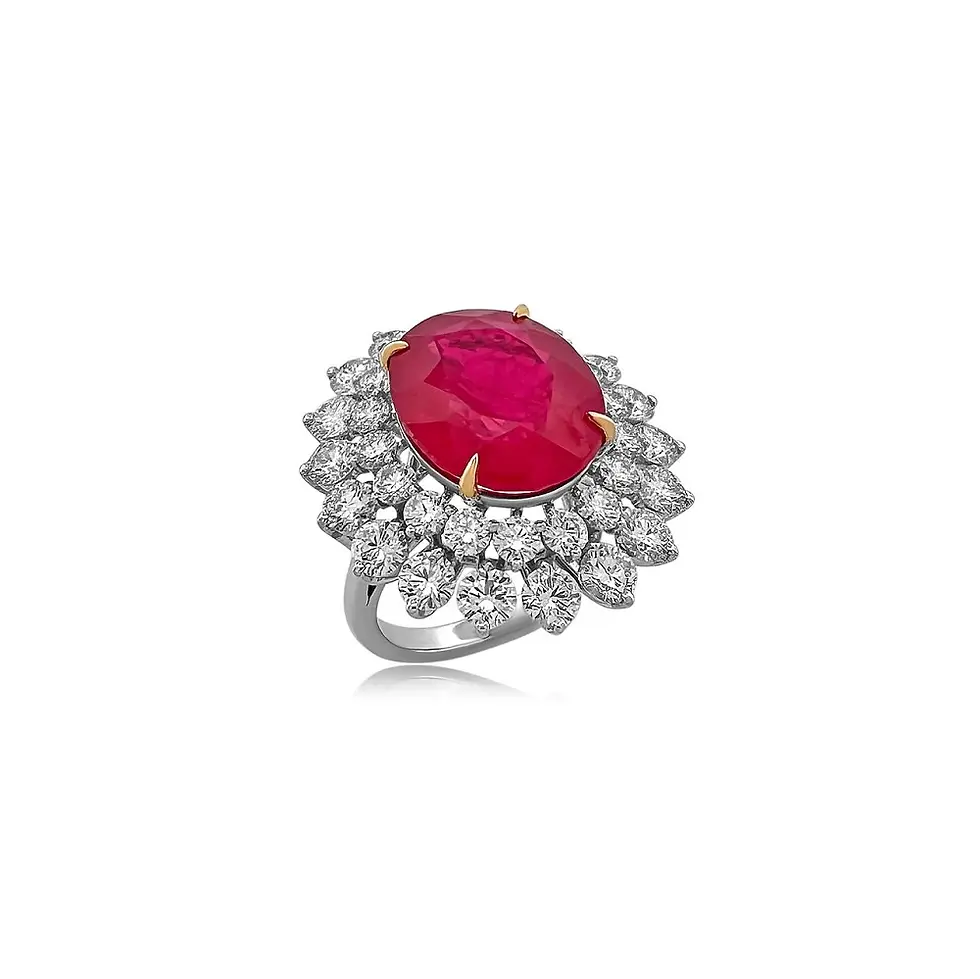
If craftsmanship, material selection, and finishing standards are rigorous, the result speaks for itself. We also work extensively with grown emeralds and rubies. The origin of the stone matters far less than its cut, colour, and how it is set.
High-street grown brands sell diamonds. My clients are buying jewellery. Those two motivations could not be more different.
ANOR is known for its discretion and private commissions. How consciously did you build a brand rooted in quiet luxury?
Discretion was never an afterthought, it was a founding principle. To this day, we sell primarily through our boutiques and private commissions. While a curated selection appears online, we do not sell digitally.
I’ve designed bridal jewellery for some of the largest weddings in the country, yet those pieces never appear in our catalogues. They belong solely to the wearer. In a world obsessed with visibility, privacy has become one of the rarest luxuries.
Bespoke forms a significant part of ANOR’s identity. How do you balance growth with such personal involvement?
Bespoke is the soul of ANOR. The solution has been clarity. Our boutiques serve daily clients and curated collections. High jewellery commissions, bridal sets, heirloom pieces are where I remain deeply involved.
This separation allows the brand to grow without compromising the intimacy that defines our couture work.
How does ANOR approach bridal jewellery differently from traditional houses?
Today, jewellery must align not just with the outfit, but with the bride’s personality, the destination, and the visual language of the celebration.
I design bridal jewellery as part of a broader lifestyle narrative, considering how it will photograph, how it will age, and how it will be remembered. Weight and excess are no longer markers of value. Elegance, proportion, and individuality are.
How do you personally view comparisons with legacy luxury houses?
I see ANOR less as a disruptor and more as a category creator. Clients do not evaluate ANOR as grown jewellery. They evaluate it as luxury. The material is secondary.
With clients in over ten countries, I see ANOR as part of a global shift, where India is finally recognised as a place capable of producing exceptional jewellery at the highest standards.
What does modern luxury mean to you today?
Modern luxury is no longer about excess or savings. It is about how something looks, how it feels, and what it stands for.
Grown diamonds belong in luxury as long as they are not positioned as a cheaper alternative. Luxury buyers don’t ask what they saved. They ask how they feel wearing it. That distinction will define the future.
You May Also Like


