.png)


Why Some Brands Never Discount — and Never Explain Why


There is an economy of silence in luxury: a set of houses that keep their mouths shut about price, refuse to run sales, and let their products do the talking. Call it stubbornness, call it arrogance, call it strategy—the result is the same. A Hermès Birkin, a Chanel Classic Flap, a Rolex Submariner, or a Patek Philippe Nautilus rarely, if ever, surfaces in a “sale” window. They are governed by a single, simple rule: price is an expression of meaning, and meaning must not be bartered away. This truth is not a myth. Publications like us that follow fashion strategy have long singled out Hermès, Chanel, and Louis Vuitton (among others) as houses that avoid discounting as a matter of policy.
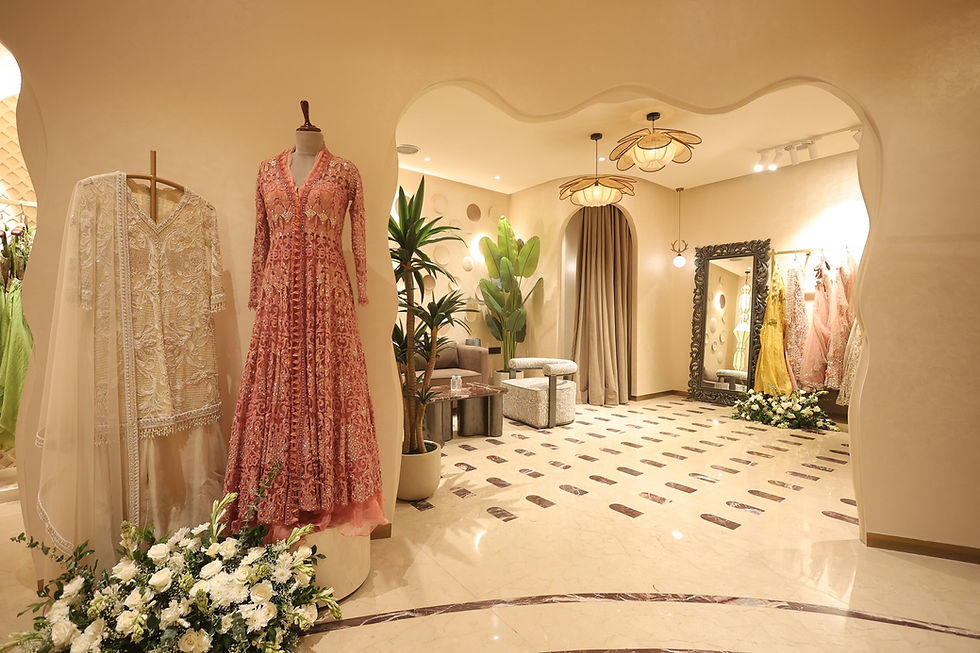
Why this works — and why it is not a vanity exercise — begins with perceptional architecture. Luxury is partly product and partly theatre. The boutique, the waiting list, the carefully policed retail partner, the ritual of a private preview: all of these are part of the product’s value. When price becomes negotiable, the theatre collapses into a marketplace. Discounting trains buyers to postpone, to ask for the “right time,” and to decode a brand’s urgency as negotiable. For heritage houses that have spent generations building authority, that lesson is ruinous. Economists and marketing scholars observing the sector find that demand for true luxury often behaves inelastically — price changes do not snap demand in the ways they do for mass-market goods — so keeping price stable can strengthen, not weaken, desirability.
This posture requires several structural capabilities most premium or fast-fashion brands simply do not have.
First: distribution control. Houses that never discount are obsessive about where their goods appear. They limit wholesale partnerships, eschew or tightly control outlet channels, and often prefer directly operated stores because those spaces allow the brand to preserve the retail theater. Prada moved deliberately away from markdowns in 2019; other houses (Chanel, Louis Vuitton, and Moncler) have for years been described as enforcing no-discount policies in directly operated channels. The point is logistics becomes a tool of meaning.
Second: manufactured scarcity. Hermès is the canonical example—not because it invented scarcity but because it industrialized it: constrained production, artisanal lead times, and implicitly sanctioned waiting lists. The payoff is measurable. Recent resale analyses show Hermès retaining and even growing value strongly on the secondary market, meaning the refusal to discount at retail is reinforced by high resale premiums that signal investment-grade cultural capital, not mere consumption. Rebag’s 2025 resale analysis and other watches-and-bags reports demonstrate how certain icons (Birkins and select Rolex and Patek references) sustain or appreciate in resale value, turning retail pricing policy into a broader market signal.
Third: creative and production tempo. When you do not need to chase the next seasonal sell-through, you can design, source, and test more patiently. Craft economies—ateliers, specialist tanneries, watchmakers’ movement houses—cannot scale quickly without losing what made them valuable. A refusal to discount insulates those ecosystems by protecting margin and slowing product cycles; that allows houses to steward technique rather than industrialize it. That patina of craft is, paradoxically, easier to sustain when price is sacrosanct.
Fourth: resale feedback loops and asset psychology. For many high-net-worth buyers, luxury purchases are partly cultural capital and partly asset allocation. The knowledge that a watch or bag retains resale value changes purchase calculus: it becomes stewardship rather than impulse. Brands that maintain price discipline at retail help sustain that secondary-market premium; investors and collectors reward that with attention and demand, which in turn justifies the primary market’s strict pricing. Data from luxury investment indexes and resale reports supports this closed loop in practice.
There are consequences and contradictions. Intentional scarcity can be political. In the past decade, headlines exposed that some houses destroyed unsold stock to protect price integrity—a practice now widely condemned. Public pressure, new regulations (for example, in France), and shifting corporate responsibility have forced change; Burberry publicly ended destruction of unsaleable goods in 2018, and the industry has been pushed toward recycling, employee sales, or donation strategies. The ethics of scarcity therefore have to be weighed against sustainability, and the best-managed houses are the ones that now pair price discipline with responsible stock management.
Not every brand can—or should—be price-intractable. The logic of refusing to discount is expensive and often only sustainable for firms with:
(a) credible scarcity (either artisanal constraints or tightly curated production),
(b) patient ownership that values brand equity over quarterly peaks, and
(c) a customer base that understands and respects the code.
Once inventory swells, or a brand relies heavily on wholesale/volume channels, discounting becomes a pragmatic lever. The industry saw this play out when Overstock forced even well-regarded houses to accept off-price channels or markdowns—a trend analyst has warned could undermine long-term equity if used without discipline.
In the end, the refusal to discount is not about money at all. It is about time. Brands that never go on sale are betting that meaning compounds slowly, that desire deepens when it is not rushed, and that value loses power the moment it starts asking for approval. They understand something the broader market often forgets: price is not a number; it is a position.
To never discount is to accept smaller audiences, slower growth, and constant scrutiny. It is to risk being misunderstood in an age addicted to accessibility. But for the houses that commit fully, the reward is a rare form of authority—the kind that does not need to persuade, perform, or explain. They hold their ground while everything else negotiates. And that, perhaps, is the quietest and most radical luxury left.
You May Also Like